Swedish timber – strong, natural, reliable
The Scandinavian taiga. The largest ecoregion of Europe, an enormous wilderness of pine and spruce. This is our home, the forestland.
Life is special here. Trees are special here.

Slow-growing and exceptionally strong
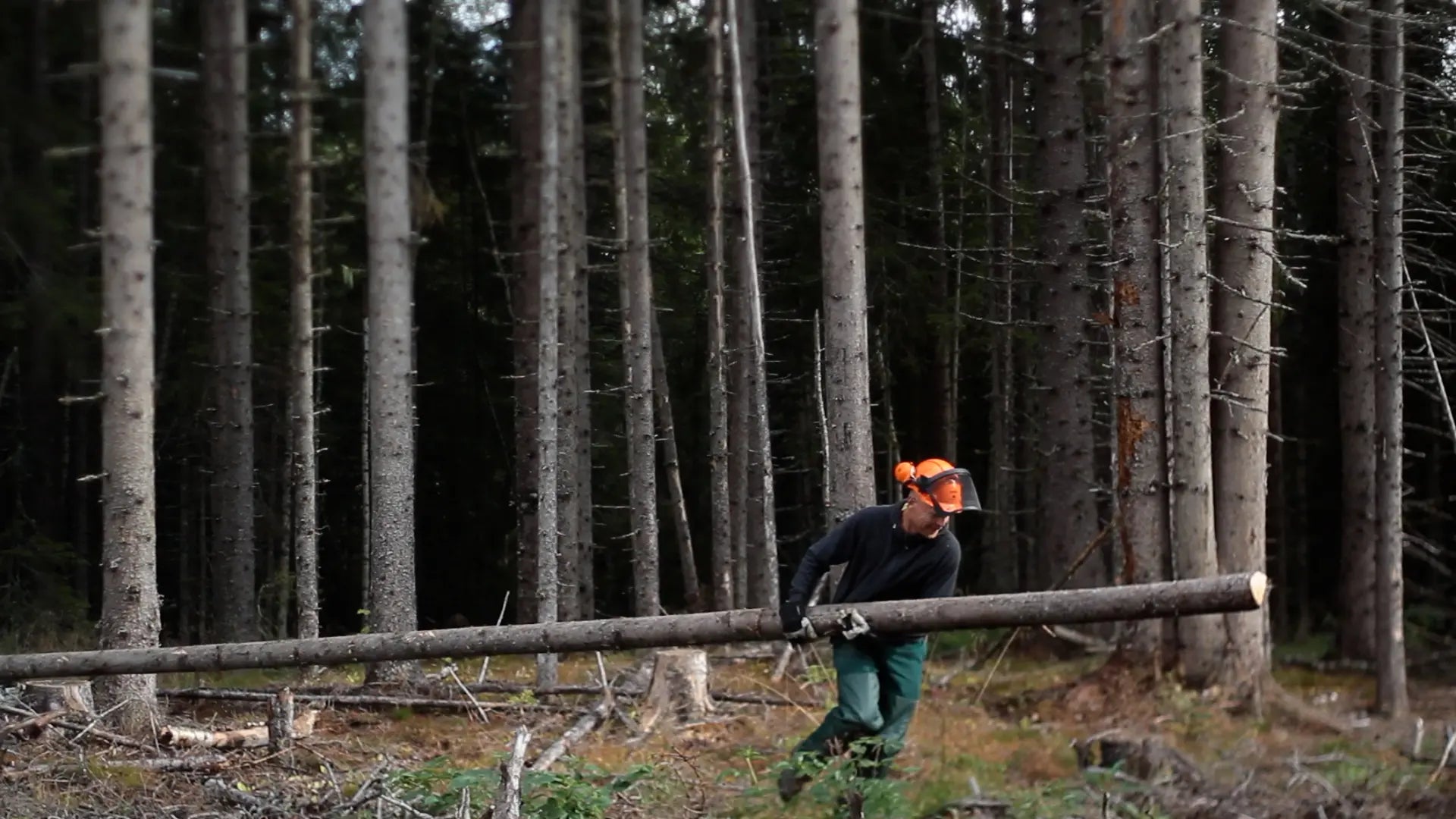
We source our Event tent poles from forests in Northern Sweden. The spruce found here grows more slowly than in many other parts of the world. The long and cold winters and the meagre soil are some of the many factors that cause this. Our trees come from dense stands of spruce where they grow tall but thin and have a high density of annual rings. A tree that’s only ten centimetres thick and ten metres tall can be over a hundred years old. They have a distinctive fibre structure and few, slender branches, making them extremely strong, flexible and relatively light. Our spruce also has a natural resistance to rot and doesn’t need any added chemicals. In other words, the perfect raw material for tent poles. And we know exactly where to find spruce that has these properties.

Small-scale production
Our pole production is closely connected to forestry in Northern Sweden, carefully managed in accordance with Swedish forestry regulations. For every tree harvested, two saplings or more are replanted, ensuring the continuity of Sweden’s forests. When a forest undergoes harvesting, we carefully select trees that are ideal for tent poles. These trees, too small for traditional timber products like planks and boards, are often destined for pulp. We utilize this resource and refine it locally and small scale, creating jobs in rural areas and beautiful natural products that last a long time.

Lab tested Swedish timber
Laboratory testing our timber to destruction proved that our poles can only come from certain parts of the world where the trees grow very slowly. This is why we carefully control the exact species of spruce tree used in our Nordic tipis, and the latitudes at which they are cut. The test results are used in our structural calculations and play a crucial role in determining the wind loading of our tents.

