
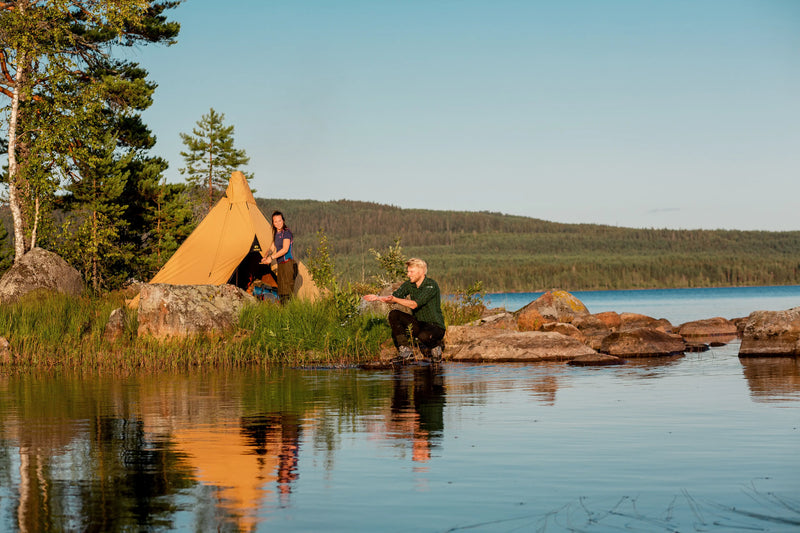
Waking up in a tent where the fabric feels cold, damp, and sometimes even dripping is something many outdoor enthusiasts have experienced—especially after a still night by a lake or in humid terrain. Condensation forms when warm, moist air from breathing, cooking, and ground moisture meets a cold tent surface. In many tents, that moisture has nowhere to go. The result is damp sleeping bags, wet gear, and a less-than-pleasant start to the day.
A Tentipi tent handles condensation in a completely different way—through its shape, choice of materials, and patented ventilation system.
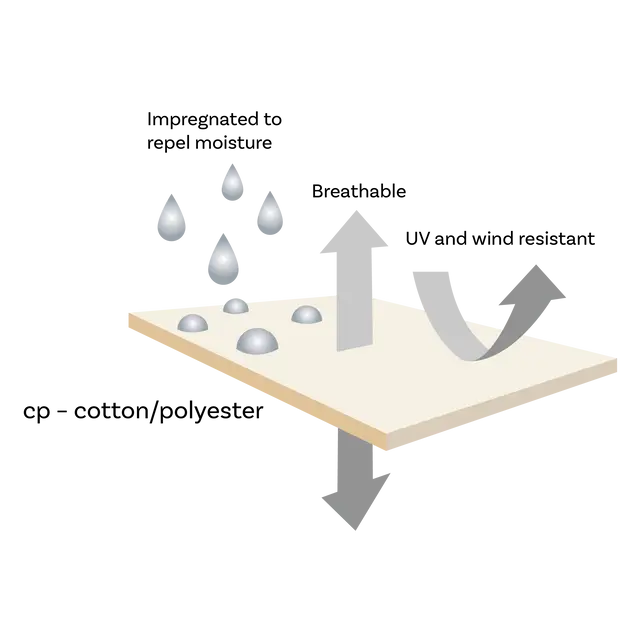
Breathable fabric (cp models)
Tentipi’s cotton/polyester (cp) models are known for being almost condensation-free.
- Natural diffusion: Unlike sealed nylon tents, the cotton fibers allow moisture to pass through the fabric.
- Moisture buffering: The material can absorb a certain amount of moisture on the inside before droplets form, creating a drier and more comfortable indoor climate.
- Note: The lighter Traillix models (lightweight fabric) do not breathe in the same way. They function more like conventional tents and therefore require active ventilation or an inner tent to manage condensation.
Chimney effect (natural convection)
The conical shape is ideal for ventilation. Warm, moist air naturally rises upwards.
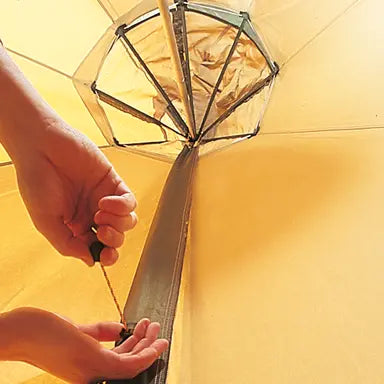
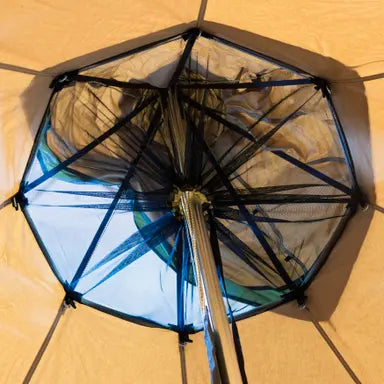
- In-Tent Vent™: A patented system that allows you to easily adjust the top vent from inside the tent—even from your sleeping bag.
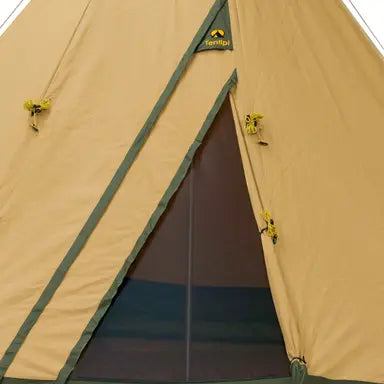
- Air intake at ground level: By opening the lower vents or using the door’s ventilated mode with the mesh door, you create a steady and effective airflow—without letting in insects, even during still summer evenings by lakes or in humid environments. This creates a natural chimney effect that carries moist air out through the top and helps keep the tent dry and comfortable.

Use of a stove or open fire
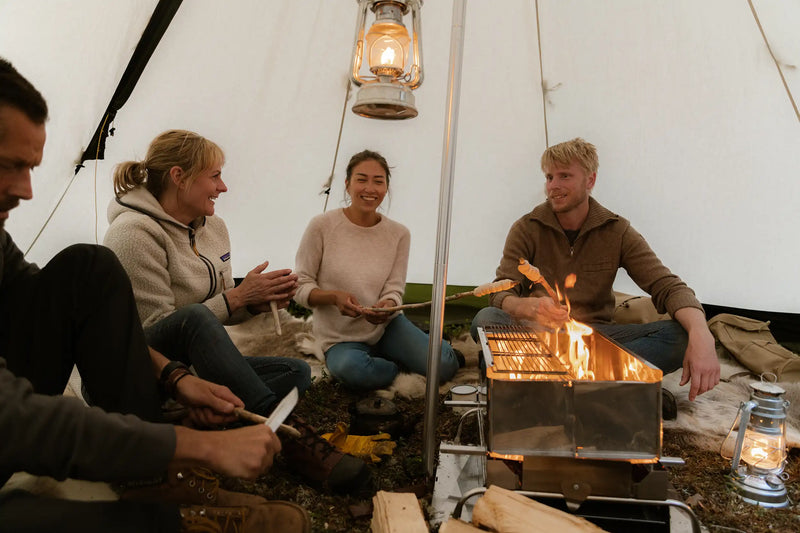
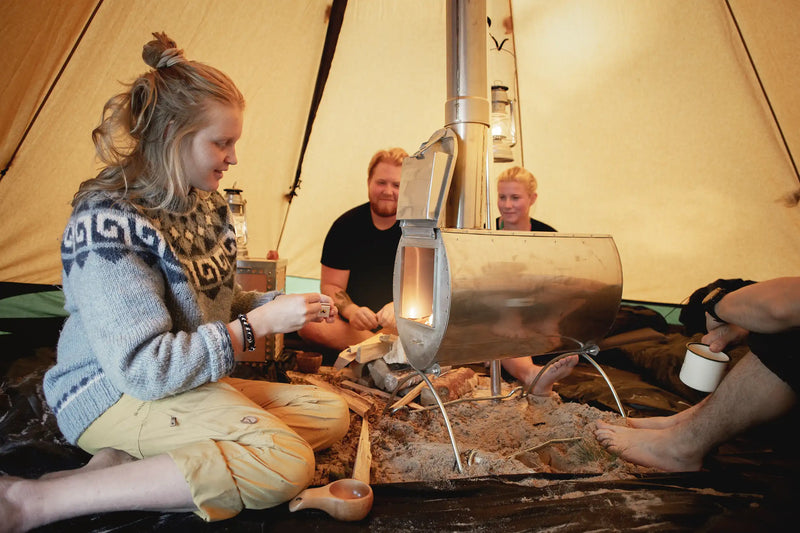
Our tents are designed to be used with a stove or open fire.
- Reduces condensation: Heat raises the air temperature so it can hold more moisture, while also increasing air circulation. Together with proper ventilation, this helps move moist air out of the tent.
- Radiant heat: Helps dry out any moisture on the tent fabric and keeps your gear drier.
Accessories for extra protection
- Inner tent: Especially useful for lightweight models or in very damp conditions, an inner tent reduces condensation by creating an insulating air gap.
- Floor: Blocks ground moisture, which is one of the main sources of condensation.


