
From the chaotic storm at Burning Man to the still, majestic Arabian desert – the story is essentially the same, says Veli-Veikko Elomaa. A tent from Tentipi is more than a product – it is a philosophy. It stands firm in winds of up to 55 mph without wavering, while offering a cool and comfortable refuge under the scorching sun. It is a tent powerful enough to serve one week as storm-proof shelter and the next as a luxurious base in the desert.
Tentipi tents are created for those who seek beyond the edges of the map – for those who want to experience the unfiltered and authentic. Because no matter where your adventure takes you, you get more than a tent – you get a home that not only accompanies you on the journey, but becomes a defining part of the story.
Here are two stories from opposite corners of the world, where the same tent proved its strength under vast, unforgiving skies.
The Trial by Fire and Wind – Burning Man
The Black Rock Desert of Nevada is a canvas of pure potential, a temporary city born from dust and dreams. Each year, tens of thousands gather for Burning Man, a festival that tests both spirit and gear. The environment is merciless: searing sun by day, chilly nights, and the ever-present, fine alkaline dust that finds its way into everything.
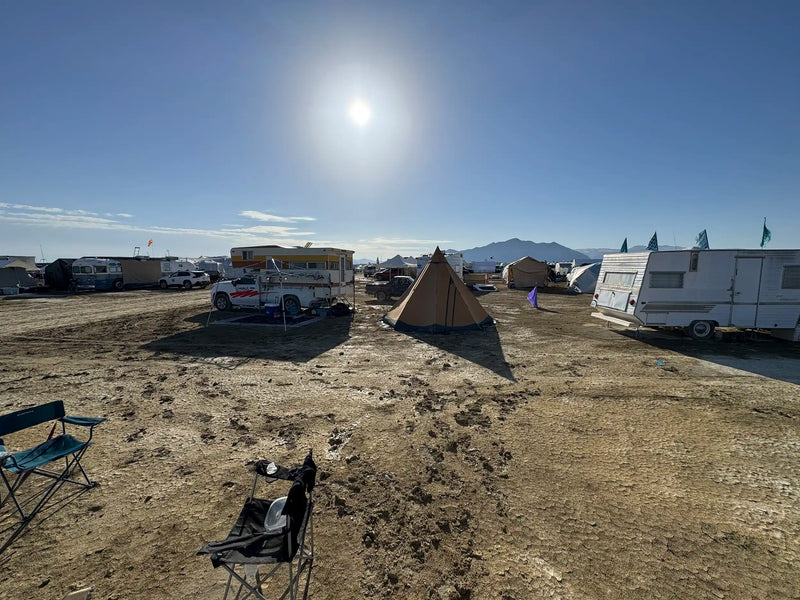
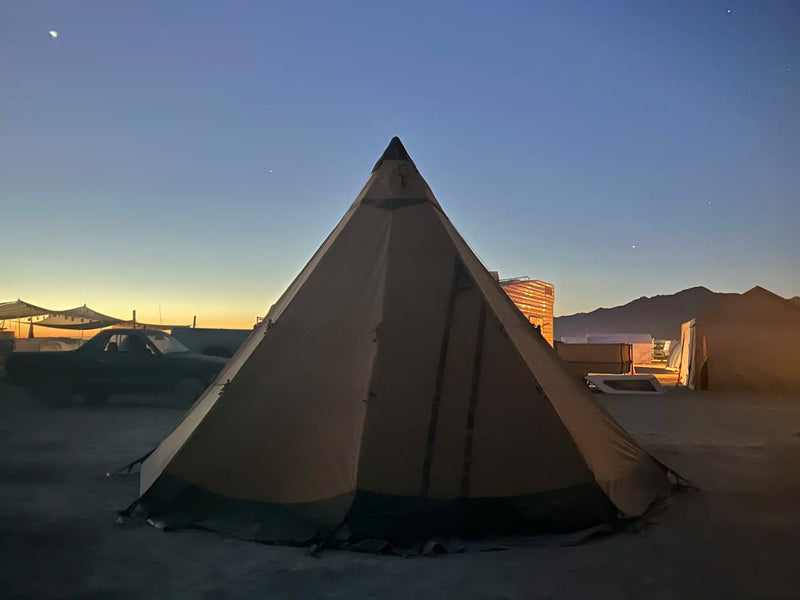
Sustained winds of 50-55 mph howled across the flat expanse, turning the air into a blinding, gritty soup. We hadn't even secured our storm cords.
Our first true test arrived unexpectedly on the third day. We were visiting a neighbor's trailer when the forecasted winds materialized not as a breeze, but as a sudden, roaring haboob—a massive wall of dust that swallowed the Playa. Sustained winds of 50-55 mph howled across the flat expanse, turning the air into a blinding, gritty soup. We hadn't even secured our storm cords.
From the safety of the trailer, we watched in dread, expecting to see our tent mangled. Across the city, we heard the sounds of struggle: the frantic hammering of stakes, the violent flapping of lesser tents, and the sickening crunch of structures giving way. But our Tentipi stood. It weathered that initial fury on the sheer merit of its design—the graceful, conical shape that let the wind flow around it, the unyielding central pole. It was covered in a thick layer of Playa dust, but there was no damage. Not a single cord had loosened.
Emboldened by its innate strength, we knew how to prepare for the next assault. When the second storm arrived days later, again with 50 mph winds and a blanket of white dust, we were ready. We had driven the anchor pegs deep at the recommended angles and secured every storm cord.
This time there was no violent shaking, no panic. The symphony outside was reduced to a steady, powerful hum. As dust devils danced outside, our Tentipi tent held its place with a quiet, confident dignity.
This time, we rode out the storm from inside. The difference was profound. The wind, which had previously tested the tent, now seemed to partner with it. With the vents strategically open to manage pressure, the tent breathed with the storm. There was no violent shaking, no panic. The symphony outside was reduced to a steady, powerful hum. As dust devils danced outside, our Tentipi tent held its place with a quiet, confident dignity.
It wasn’t just a shelter; it was a sanctuary. A place where our camp could witness the raw power of nature in awe, not anxiety, emerging after hours to a landscape rearranged by wind, our home still standing tall and proud amidst the chaos.
A Sanctuary Under a Billion Stars – The Saudi Desert
Months later, the same tent found itself in another ancient desert, but with a completely different character. We were camping in Saudi Arabia, the land of vast areas of sandy sea. Here, the challenge wasn't a sudden, furious storm, but the immense, silent expanse. The silence is so profound it has its own weight, and the stars at night are a breathtaking, crystalline canopy.
The days were hot, but the Tentipi’s ventilation system came into its own again. By adjusting the air cap and ground vents, we created a cooling convection current, making the interior remarkably comfortable while the sun blazed outside.
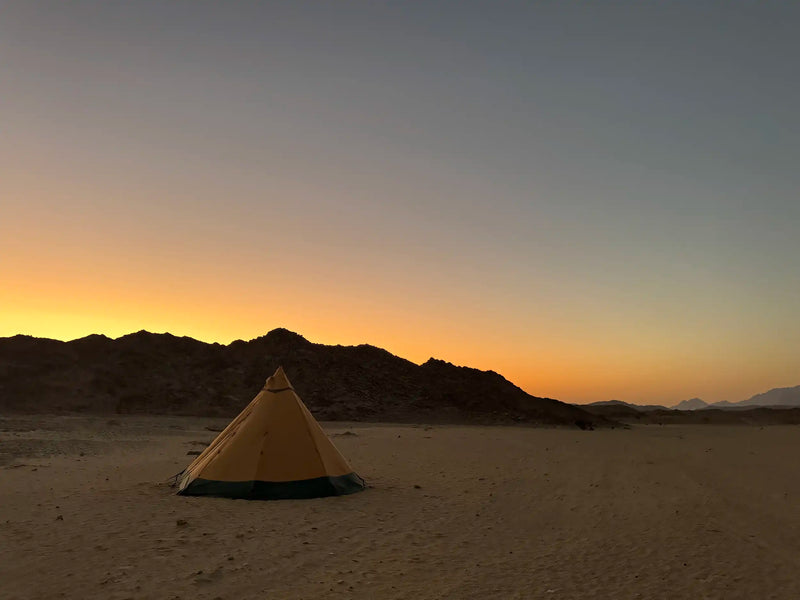
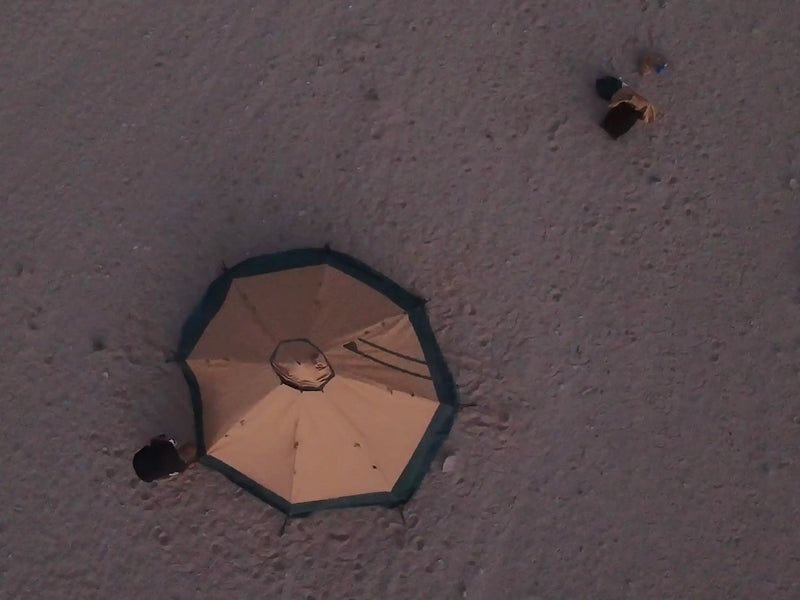
As evening fell and the temperature dropped, we gathered inside around a small, safe central heater giving us complete peace of mind.
The spacious, circular design became our living room, our dining hall, and our observatory. With no corners, the space felt open and communal, perfect for sharing stories and sweet tea. We slept soundly, listening to the gentle whisper of wind over the dunes—a sound so different from the Playa’s roar, yet equally majestic. The tent was no longer just weathering a storm; it was enhancing a profound connection to the timeless beauty and tranquility of the desert.
The tent at Burning Man and in the Saudi Arabian desert is a Zirkon 7 cp with Floor 7 Comfort.
Veli-Veikko Elomaa


